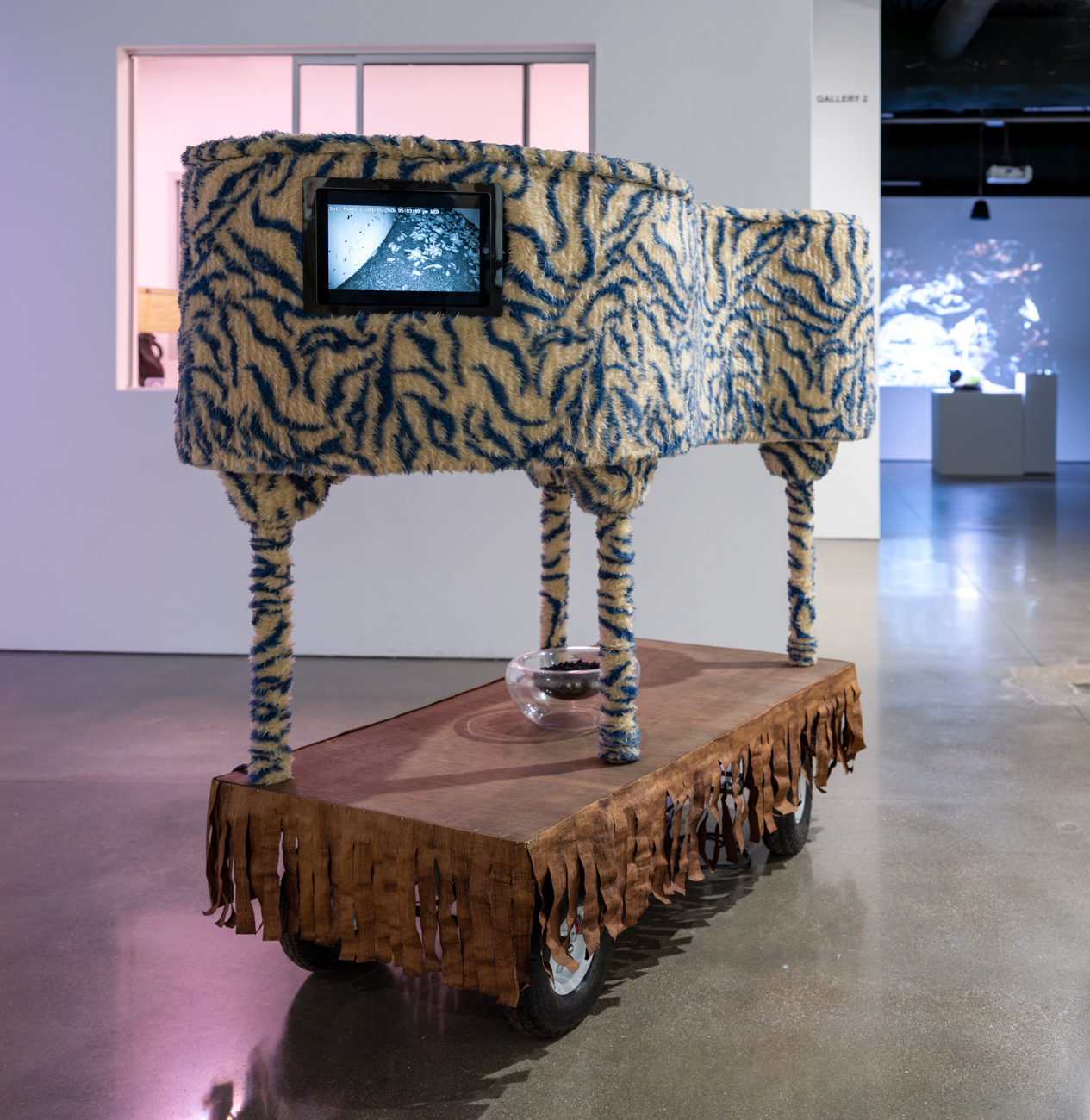

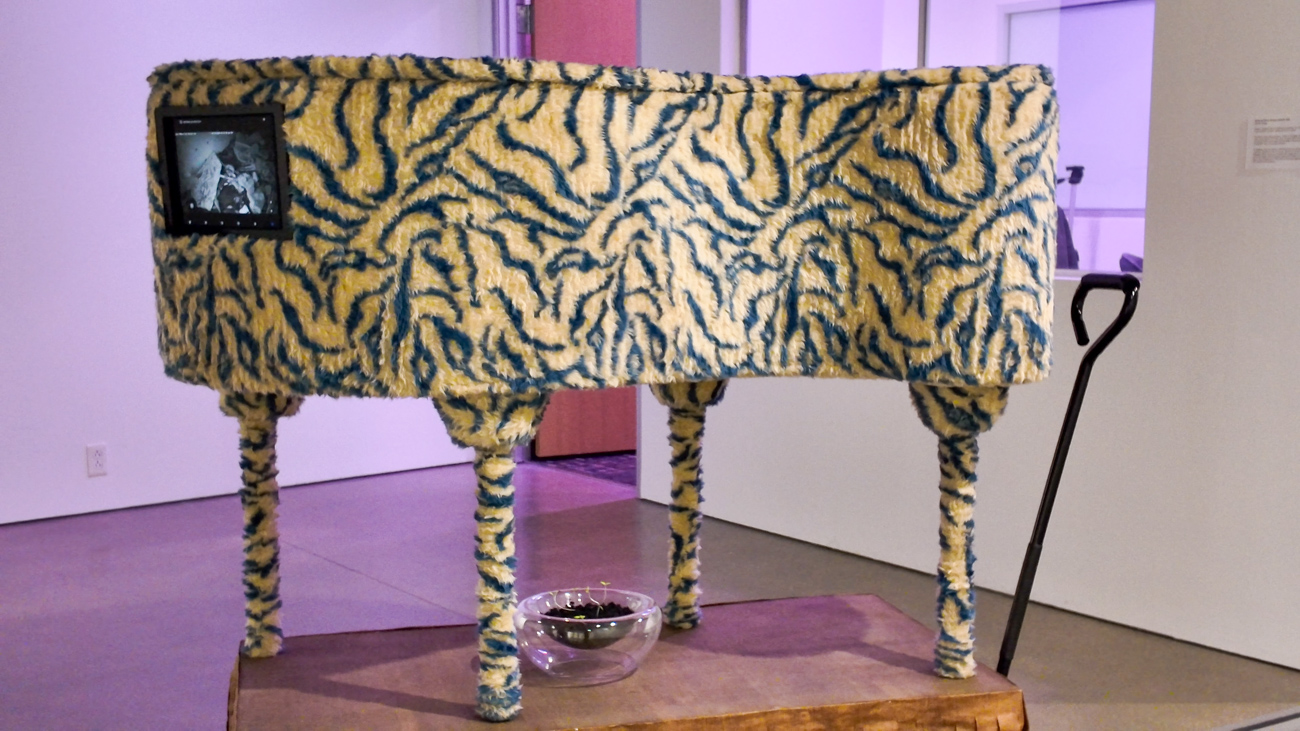

Thousands of composting worms and isopods and billions of microbes live inside this worm-shaped wagon. They are making rich compost from waste generated from my home, such as cardboard, wilted lettuce, banana peels, apple cores, dead plants, tea bags and used coffee grounds. This composting ecosystem includes a colony of red-wiggler worms (Eisenia Fetida), who have lived with me for over thirty years. We have shared many meals. The fertilizer they make is fed to my houseplants, herbs, tomato plants, and lettuces.
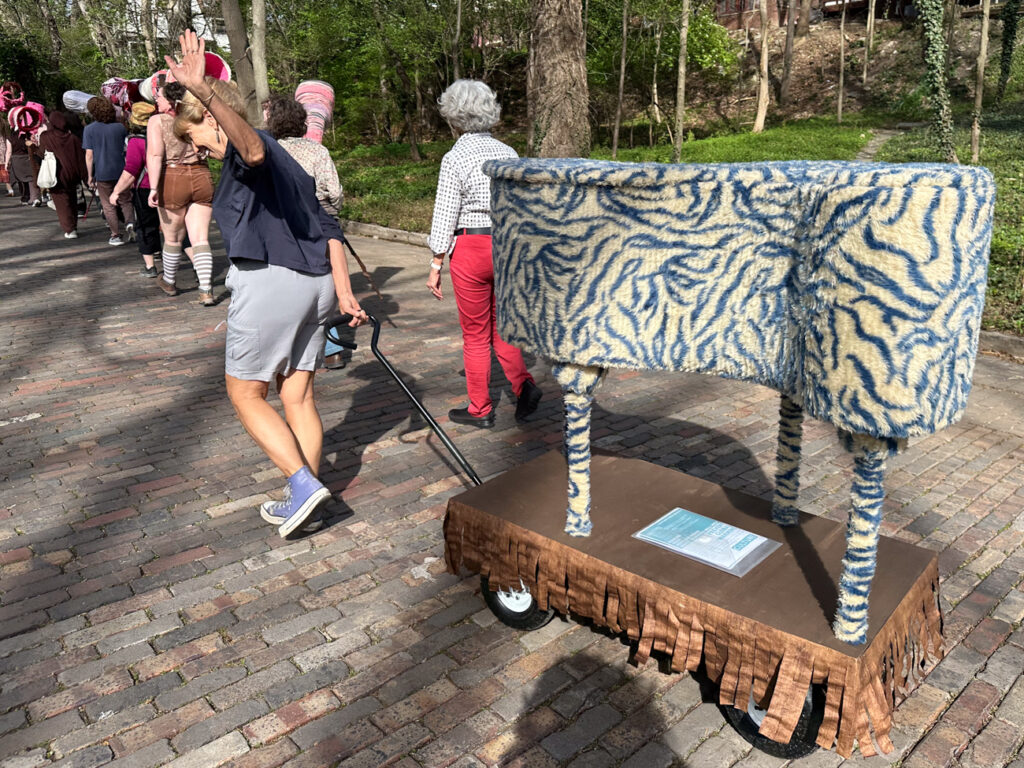
To celebrate and share these soil critters, I converted an older worm‑bin sound sculpture into a wagon with a live, infrared webcam. Detritivores work in the dark. They do not announce their important role in mitigating climate change by processing food waste without methane emissions, nor do they speak about circulating nutrients and healthy microbes throughout the world’s soils. I’m sharing this on their behalf because I hope others will develop regenerative relationships with composting ecosystems.
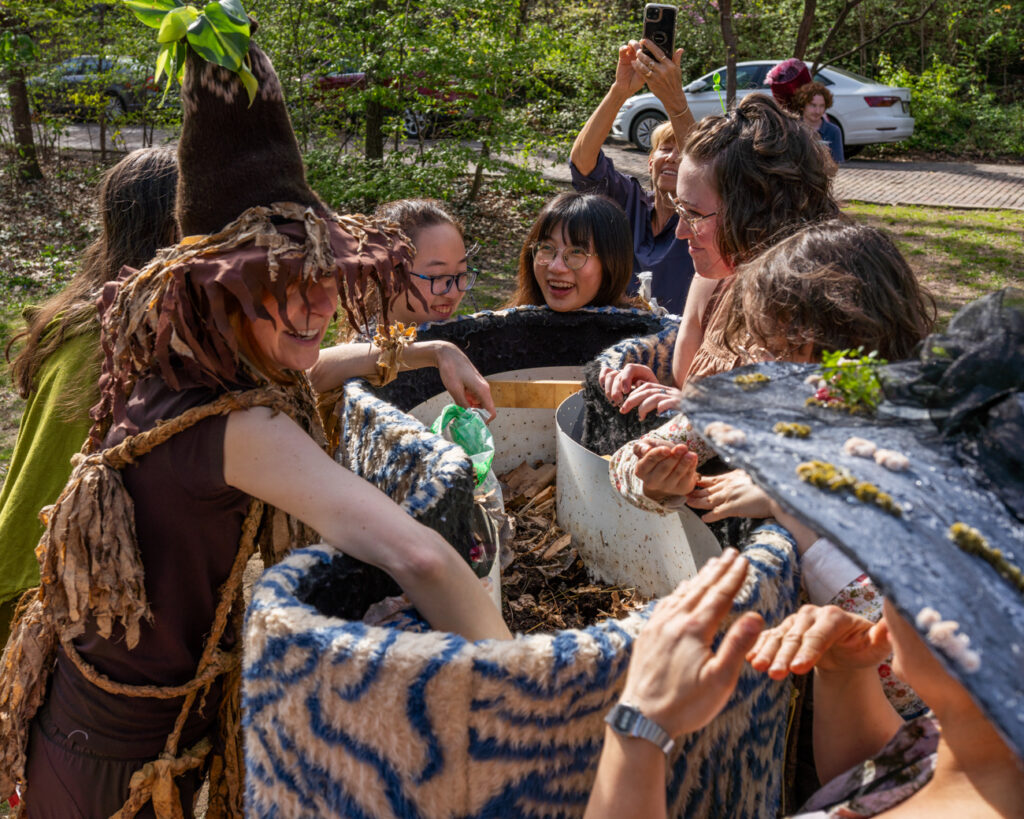
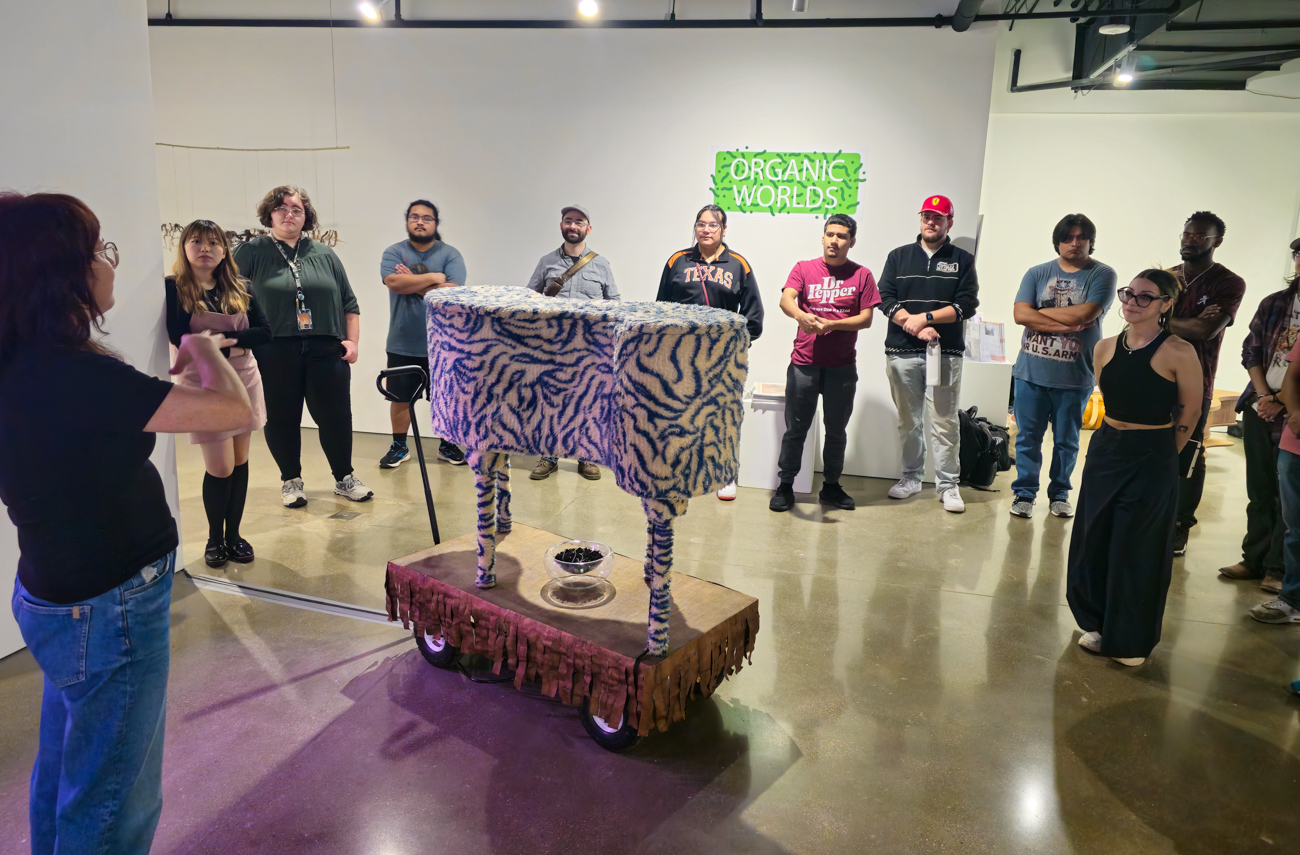
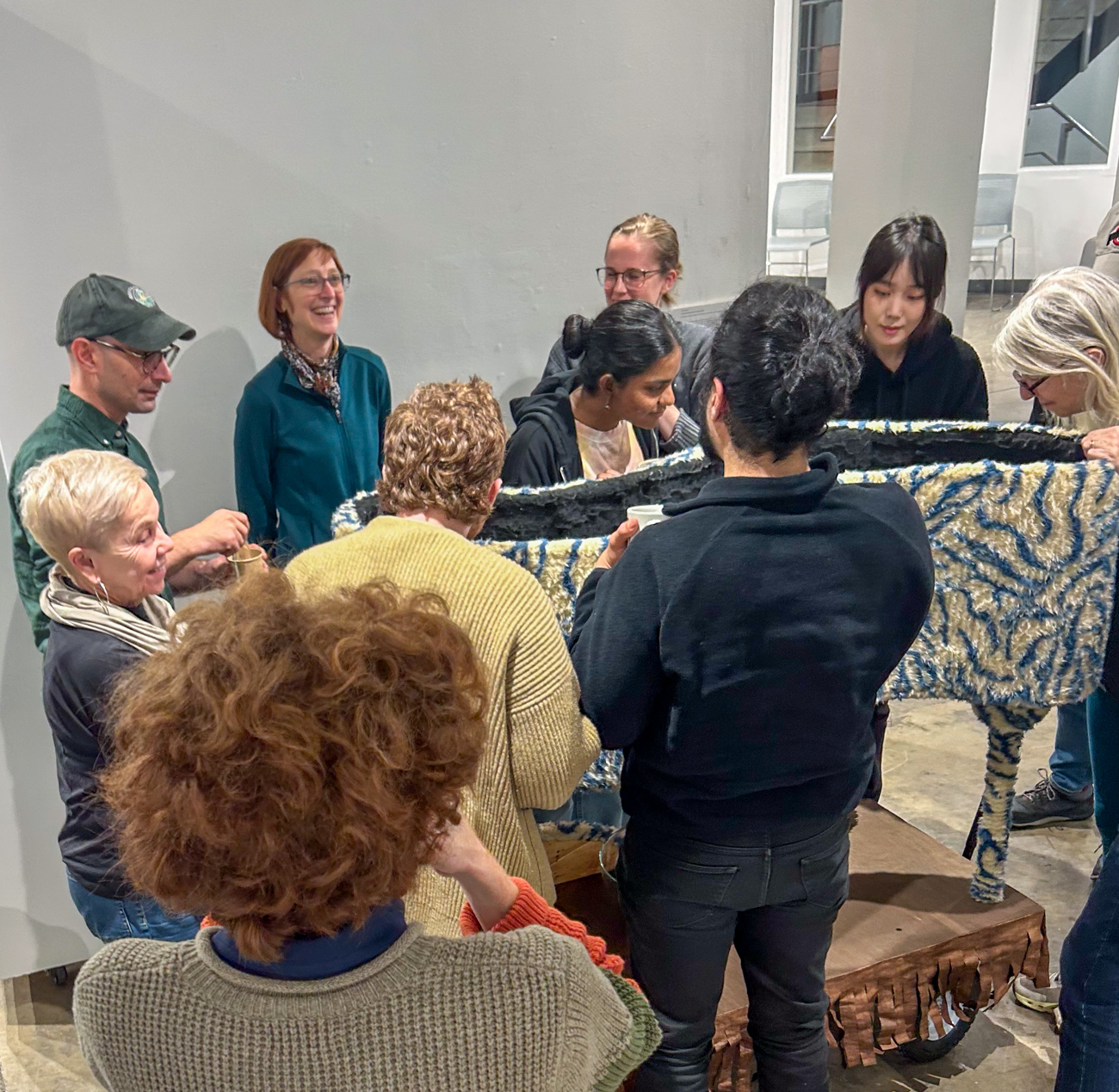
The Mobile Soil Maker showcases a type of worm composting system that is well-suited for domestic spaces. It helps me share information, answer questions, and distribute starter bags on the spot for people who are ready to co-habitate with worms. They are always free because they are abundant–and removing a few bags full of worms from the Mobile Soil Maker creates more abundance. The ecosystem repopulates to size of the bin, and those who are taken into new homes gain new habitat spaces to grow into. This is akin to the gift economy that Robin Wall Kimmerer describes in her essay The Serviceberrry, an economy of abundance.
Applying the lessons of compost to my art practice
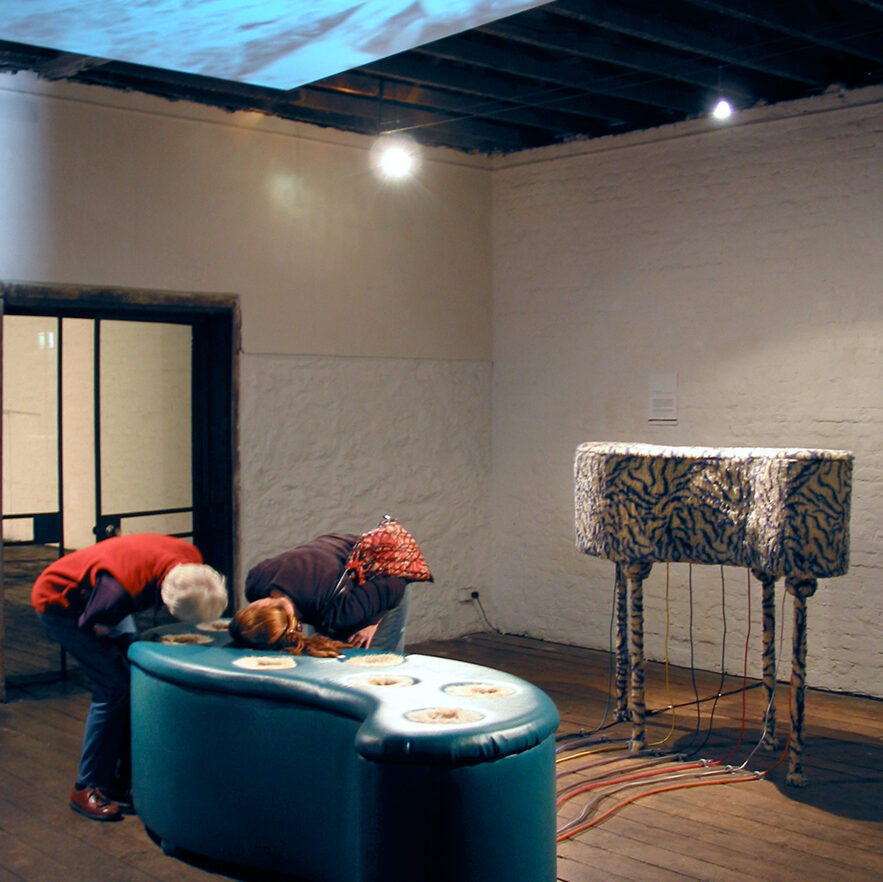
I needed more space to make art, so I have been breaking down old art installations that filled up my studio. Reusable parts are being recycled into new projects. The furry section of the Mobile Soil Maker was a part of a sound installation that amplified the sounds of worms (Intraterrestrial Soundings). The plastics I used to build much of this old work in 2004 are not compostable, so the best I can do is re-use and give parts away. The giant couch part ended up going to a tattoo parlor in my neighborhood. Many of my current projects use materials that detritivores can eat – and I am looking forward to watching some of these projects biodegrade inside the Mobile Soil Maker.